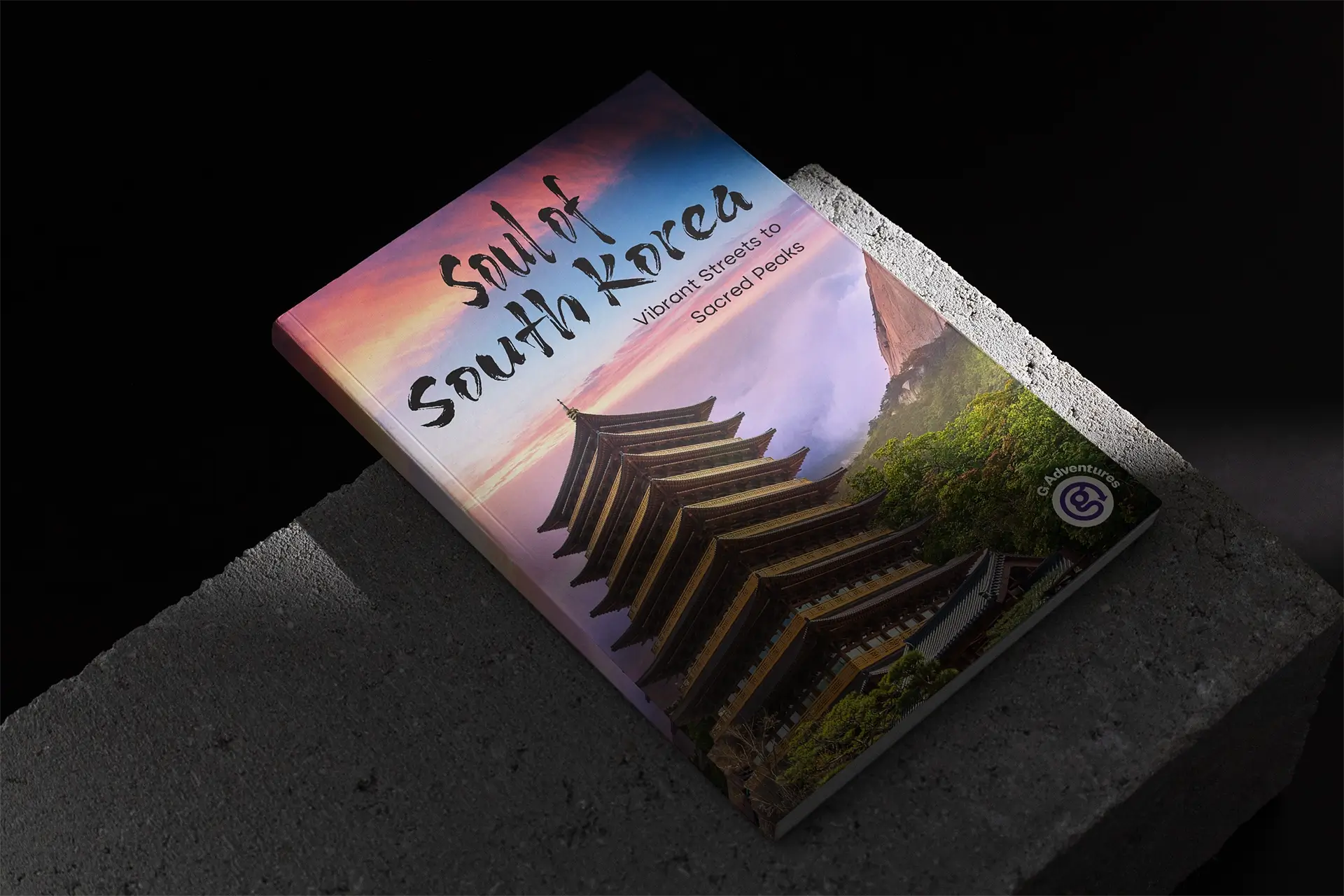
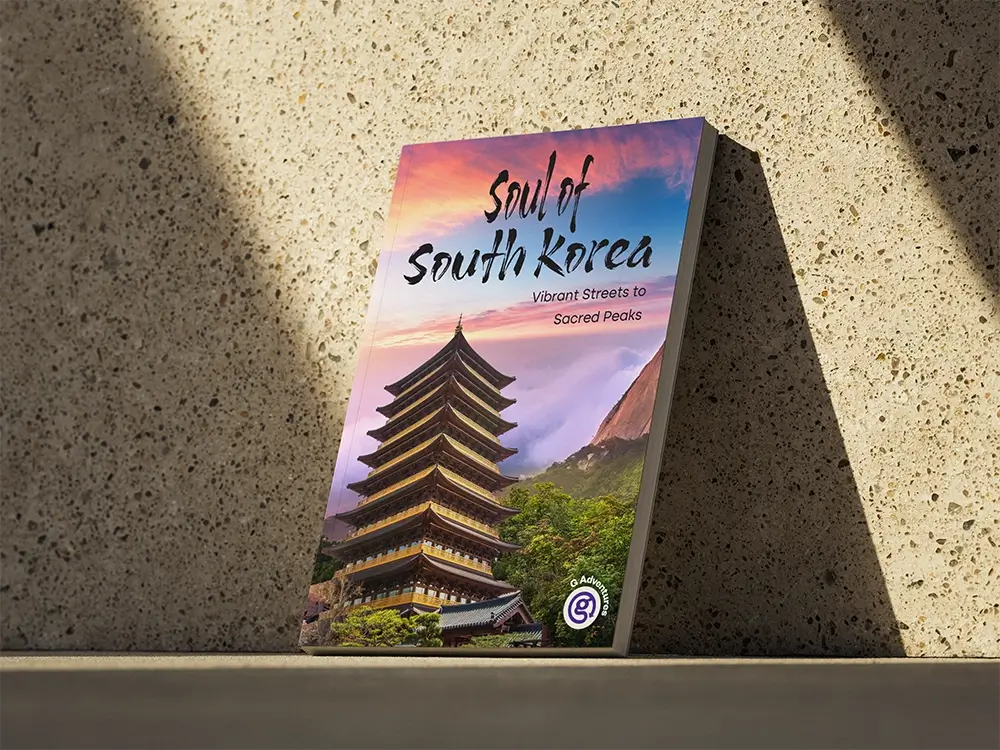
Soul of South Korea hero

Travel Brochure & Publication | [ Oct 2025 ]

Capturing the contrast between fast urban energy and ancient tradition.

RoleGraphic Designer
ToolsAdobe InDesign, Photoshop, & Illustrator
FocusEditorial Design

[ Objective ]

Soul of South Korea objective visual

Travel brochures often feel like a mess of cluttered lists and generic photos that fail to capture the energy of the trip. I saw an opportunity to take a dense G Adventures itinerary and turn it into a premium editorial experience.

My goal was to balance that heavy travel data with the vibrant atmosphere of South Korea. By using structured layouts in InDesign and a careful eye for imagery, I built a system that stays sharp and orderly, proving that even a complex schedule can be presented with total clarity.

[ Typography ]

Travel guides usually sacrifice personality for readability, or vice versa. The typography for this project had to capture South Korea's energy while making a dense schedule easy to follow.

1.

Cultural Character

Seoul
Table of Content

Amanojaku

As display typeface

Reason:

I chose this for the titles to bring a sense of energy and movement to the page. Its expressive style captures the "spirit" of South Korea, immediately signalling a journey that is vibrant and authentic.

2.

Functional Structure

South Korea Itinerary
Day 1 · Seoul · 08:30

Altone

As primary body typeface

Reason:

To balance the bold titles, I used this geometric sans-serif for the main text. It provides the necessary structure to keep dense travel itineraries organized and easy to read, ensuring the layout remains breathable and professional.

[ Editorial Flipbook ]

Click to read

Page 1 / 7

[ Retrospective ]

A brochure lives in someone's hands. The page has to do all the work. No hover states, no animations, just layout, type, and image earning every second of attention.

Print Thinking

I kept defaulting to digital habits early on. Grids that worked on screen felt suffocating on paper. At some point something clicked and I stopped thinking about pixels and started thinking about the physical object someone would actually hold.

Breathing Room

The original itinerary was a wall of information. Getting it to feel spacious without losing anything meant making a lot of small calls about what deserved space and what didn't. The layout only works because of those decisions.

Typographic Balance

Amanojaku brought the energy but it needed something steady next to it. Finding a pairing that felt both expressive and functional was less about rules and more about feel. When it finally clicked, the whole layout fell into place around it.